Nashae: Supercharged Fashion Design
Fashion
Product Designer
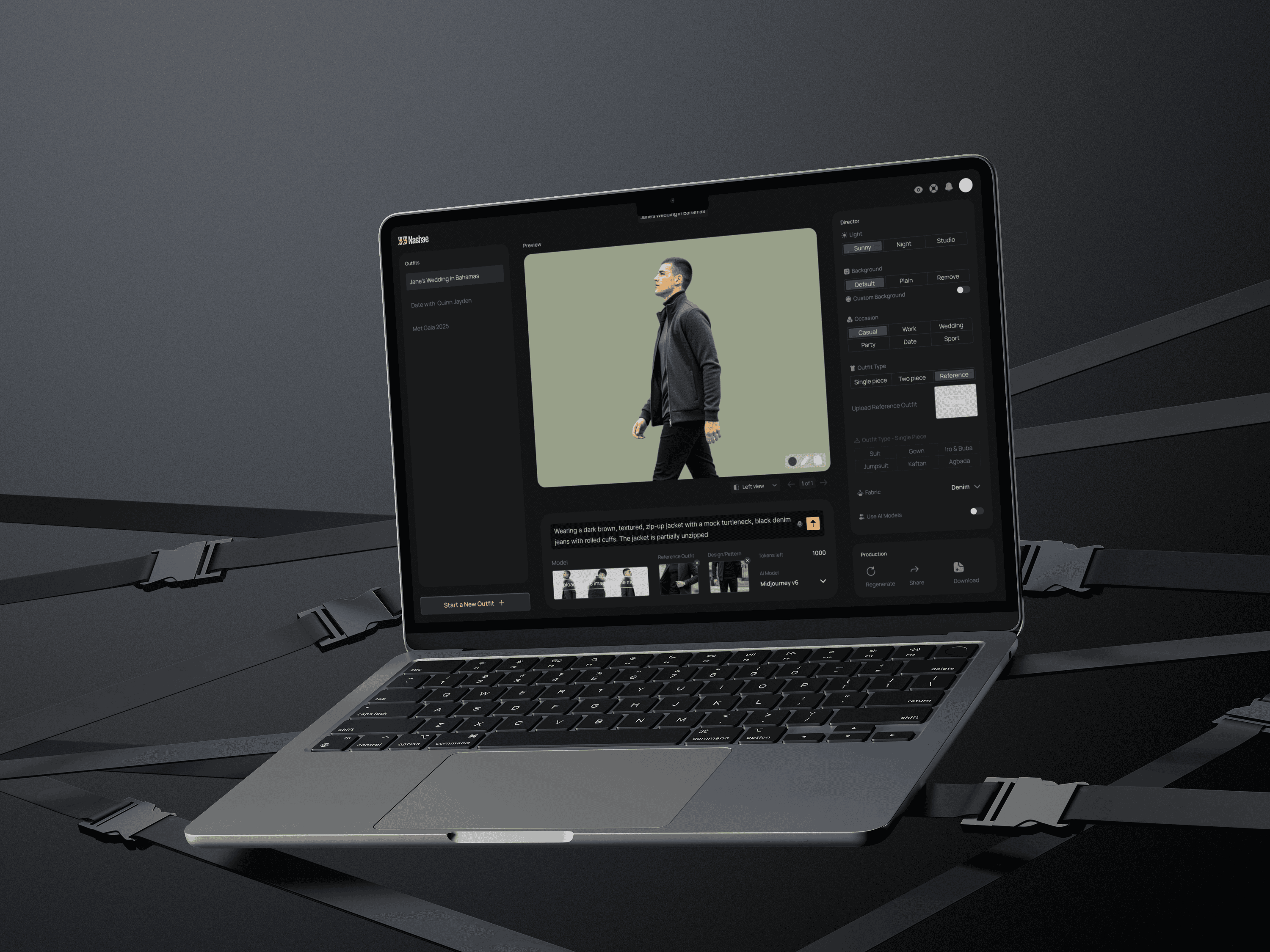
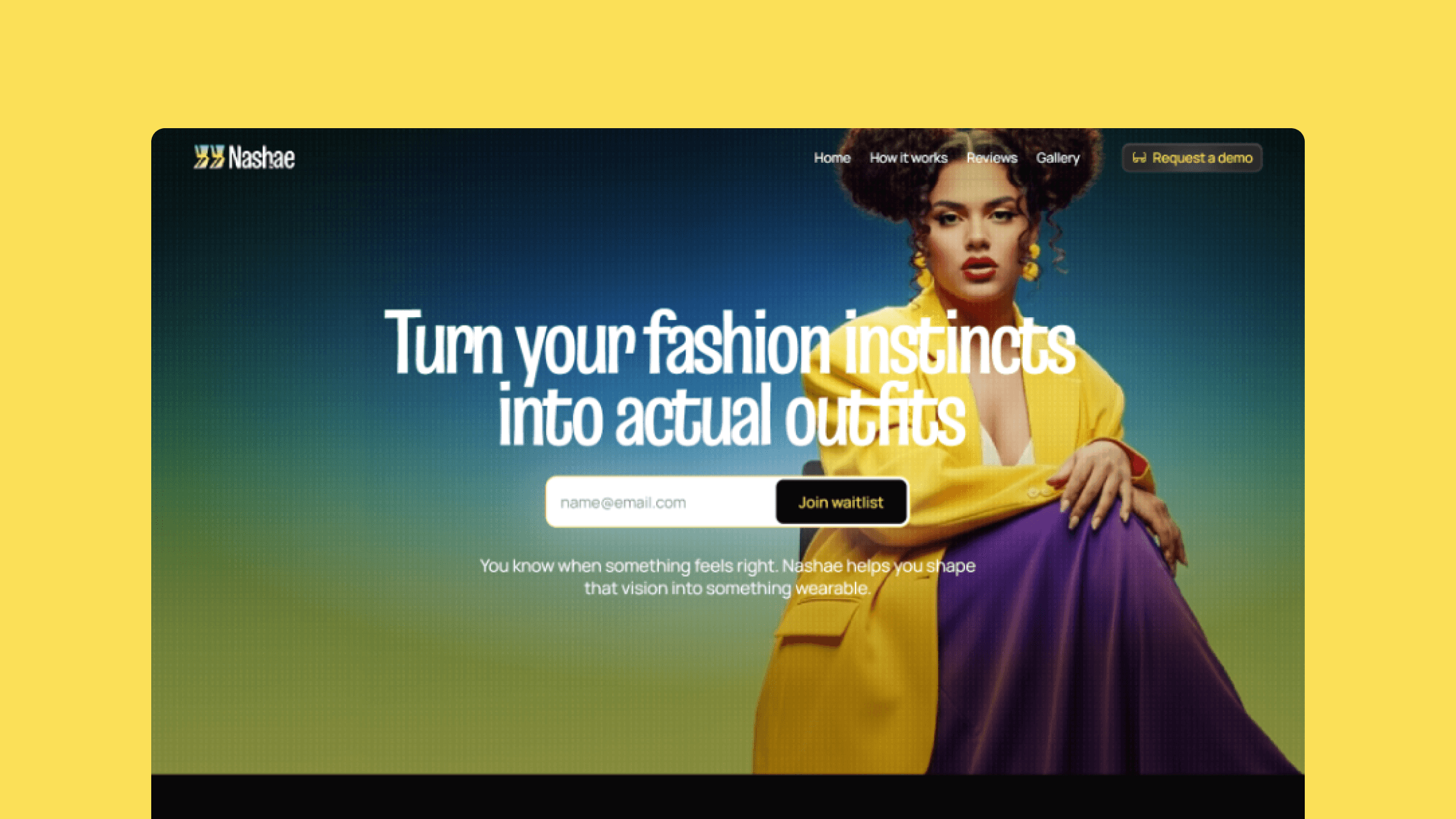
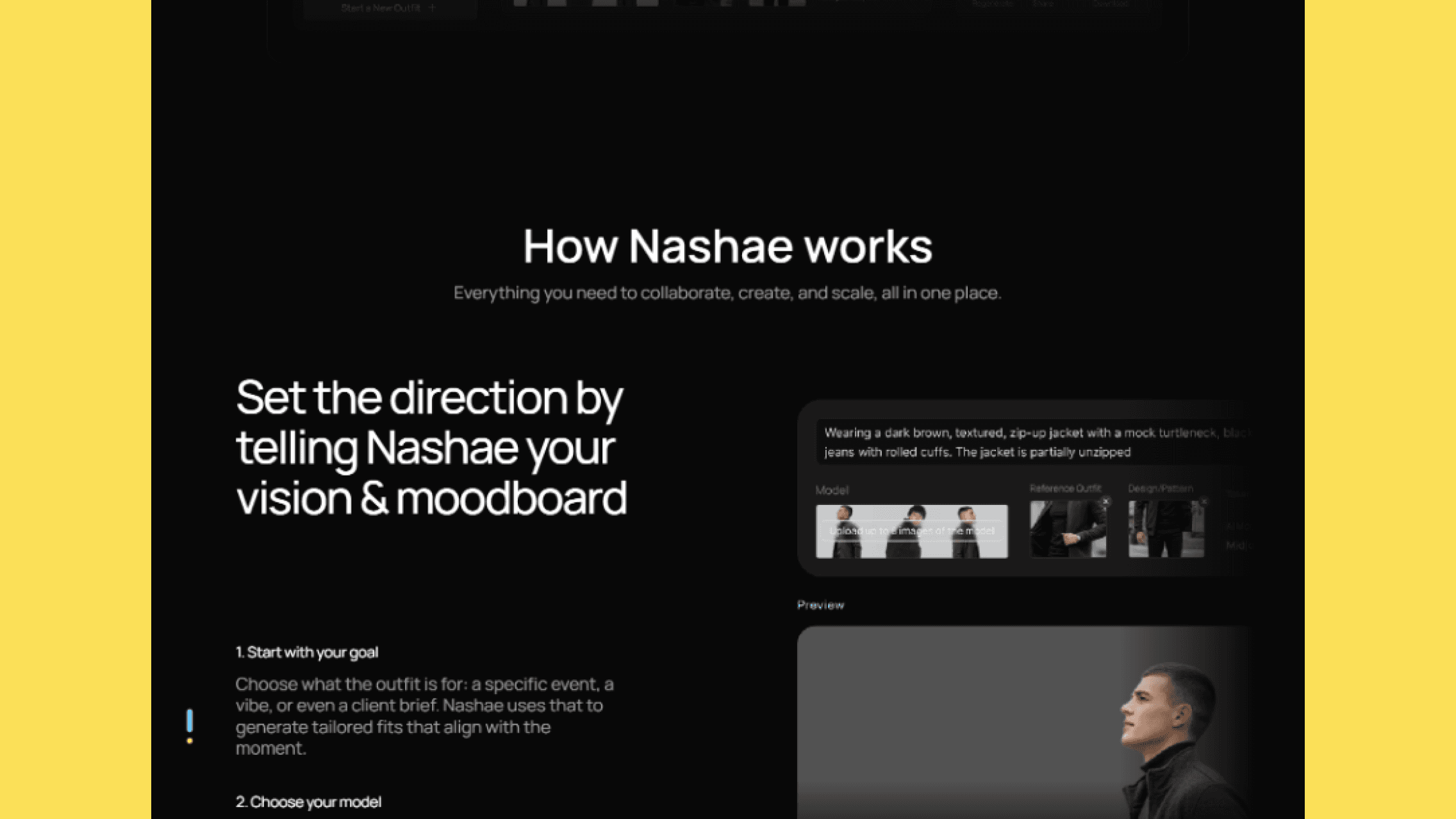
Most fashion ideas die in the sketchbook, or worse, after a frustrating back-and-forth with a tailor. Nashae is set to change that. It’s an AI tool that helps anyone turn raw ideas into outfits they can see, refine, and hand off with tailor-ready files. From casual fits to high-fashion statements, it bridges imagination and production.
What saw that needed fixing:
Designers often end up with sketchpads full of ideas but nothing tangible to show.
Outfits can look great on one body type and terrible on another. Nashae helps you try before you buy or sew.
Communication between clients and tailors is usually broken: too many vague references, too much wasted fabric.
What we set out to achieve:
Make fashion personal with tools that fit your moodboards, events, and color palettes.
Help people build a body of work quickly, without losing creativity.
Smooth out the entire workflow from concept to tailor-ready files.
Research / Discovery
First step was studying how fashion design actually happens today. From professional designers to students, even hobbyists, we saw a common gap: ideas rarely survive the leap from concept to final outfit. We explored AI try-ons, image generation tools, and even Google’s Try-On AI for inspiration.
Wireframes / Concepts
We started with chat-based only prompts but quickly realized it wasn’t enough. People needed something more interactive, so we tested side-by-side generations, moodboard uploads, and reference inputs.
UI Design
The focus became speed without losing flow. We added front, side, back, and top views in one place, plus seamless navigation across different AI sources.
Testing / Iteration
We tested with students and tailors. Their main question wasn’t “how does it work?” but “what happens after design?” That insight pushed us to polish exports, file downloads, and design vaults.
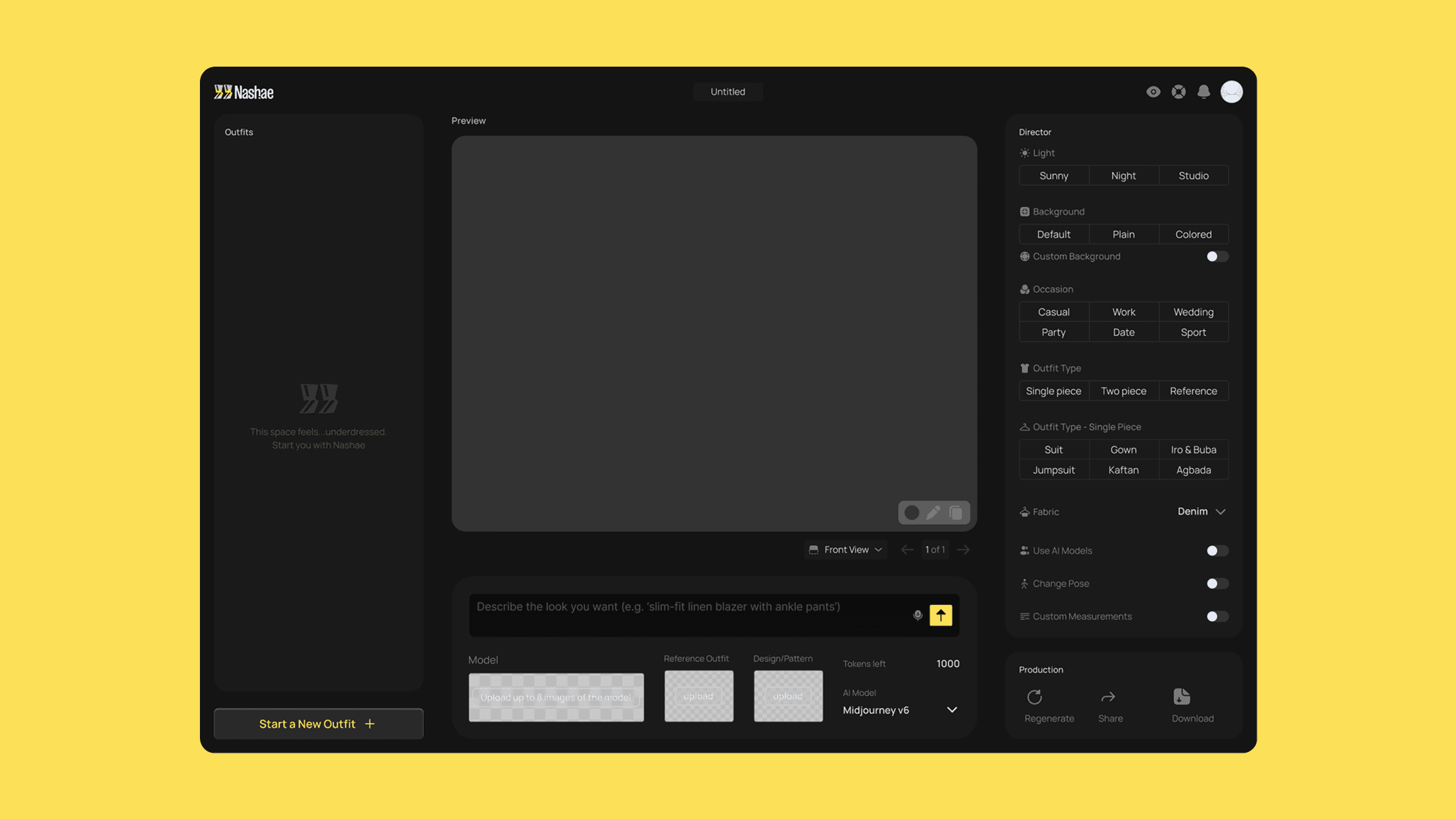
Nashae would give designers and everyday users new possibilities:
Students could build full portfolios without hiring models.
Clients now pitch outfits with real visuals instead of rough sketches.
Tailors cut mistakes and wasted fabric with clear specs.
Create satisfaction like the following in our users:
“Finally, something that makes sense for non-designers.”
“My design portfolio was way easier to manage.”
“Helped me figure out what works for my body.”
“It’s like a fashion assistant I didn’t know I needed.”
“My styling sessions with clients are so much smoother.”
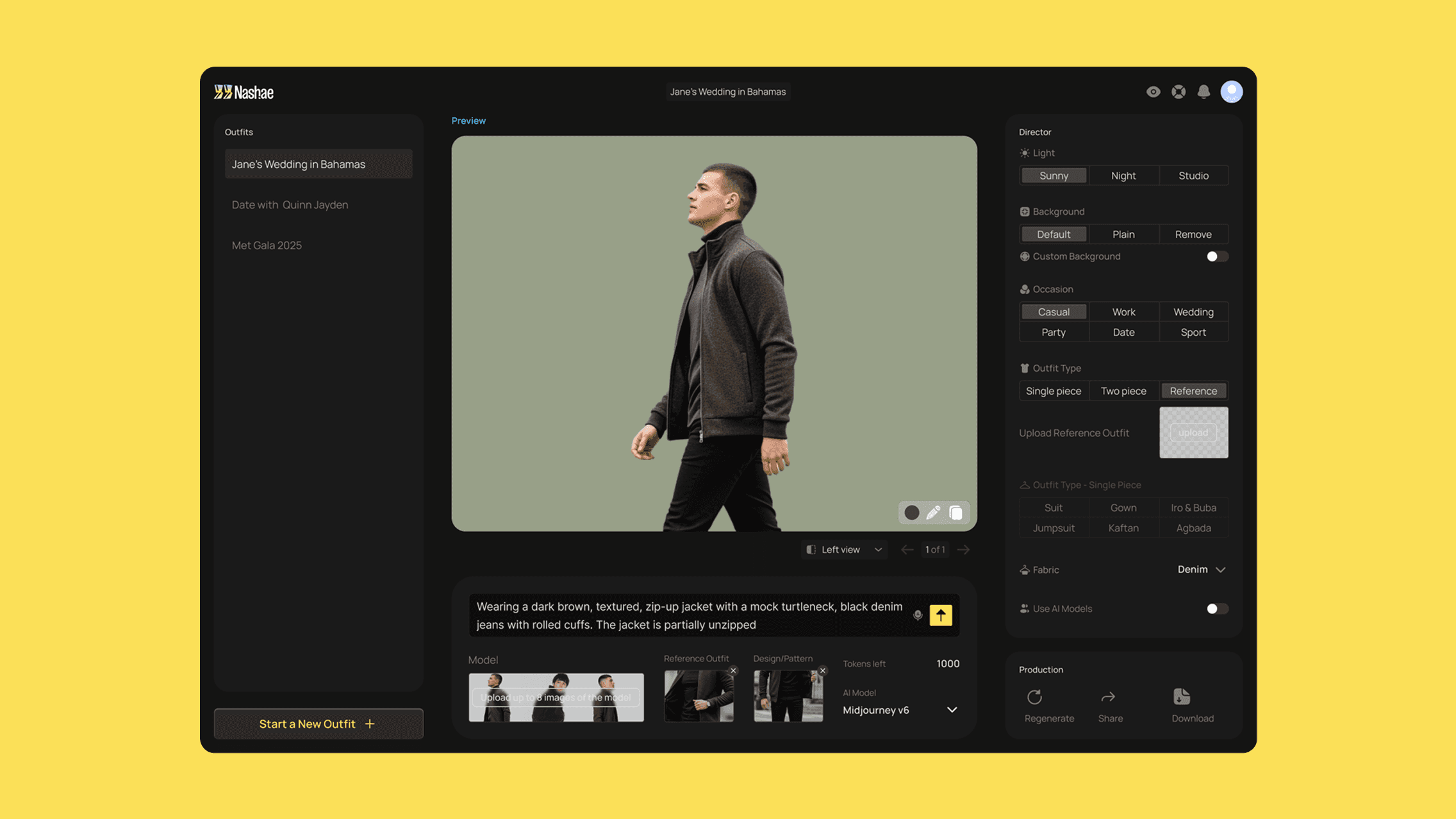
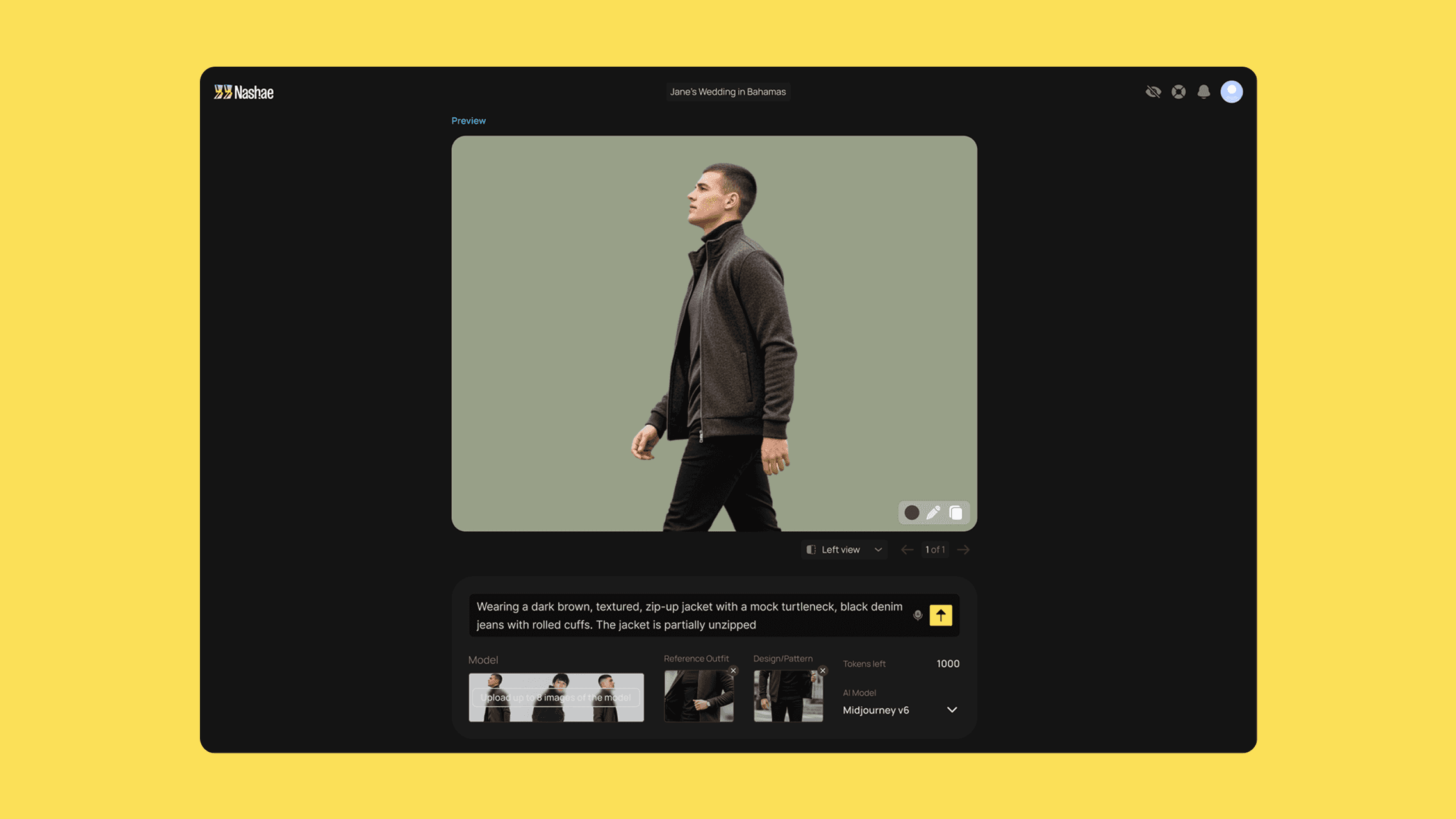
The biggest lesson I learned is that building for creativity is very different from building for productivity. Creative people don’t want to be locked into rigid steps: they need the freedom to explore, switch directions, and start over if they like. What surprised me most was how important it was to give users multiple paths without overwhelming them.
The tool had to feel invisible, staying out of the way while still encouraging play. If I could do it again, I’d bring in professional designers earlier, especially to refine how fit and tailoring specs worked. In the end, I realized creative tools should enable rather than just solve problems. The real success isn’t always about speed: sometimes it’s simply about making something possible that wasn’t before.
View More Projects